Perth treats teeth whitening as a Saturday appointment between a cut and a river swim. Clinic windows from Scarborough to Applecross advertise a shade guide and a lamp. The colour of a tooth is not a filter. It is enamel thickness, dentine, old fillings, tetracycline bands from childhood, tea, coffee, red wine, and the way light hits a wet surface. Bleaching can shift some of that. It cannot rewrite a crown, and it cannot make a grey dead tooth behave like its neighbour.
This is not a ranking of kits. Dentist Perth does not sell chairs or gels. It is a map of what actually changes colour, what only stings, and why a beauty-salon bleach is a different legal object from a dentist-supervised tray. If you are still choosing who to sit with, start with how to choose a dentist in Perth. If the question is veneers rather than shade, skip ahead to veneers, bonding or whitening.
Colour is chemistry, not a weekend
Healthy enamel is translucent. The yellow-brown you notice in a bathroom mirror on a harsh Fremantle morning is often dentine showing through, plus stain sitting in the microscopic roughness of the surface. Extrinsic stain — tea, coffee, red wine, curry, smoking, chlorhexidine mouthwash used for months — sits on or in the outer enamel. A scale and polish can lift a surprising amount of that before anyone opens a syringe of peroxide.
Intrinsic colour lives deeper. Age thins enamel. Trauma can darken a single tooth from the inside. Some antibiotics taken in childhood leave bands that bleaching barely touches. Fluorosis, depending on severity, can look white, brown, or mottled; peroxide is a poor answer to mottling. A tooth with a large composite filling or a porcelain crown will not bleach with the enamel around it. People discover this on the way out of an in-chair session, when the filling looks suddenly tea-coloured against a lighter neighbour.
Ask for an examination first, not a shade appointment. Decay, leaking fillings, cracks and gum inflammation should be on the table before anyone talks about “up to eight shades”. Our cosmetic dentistry hub exists because colour, shape and alignment are three different jobs sold as one smile.
In-chair bleaching is speed, not magic
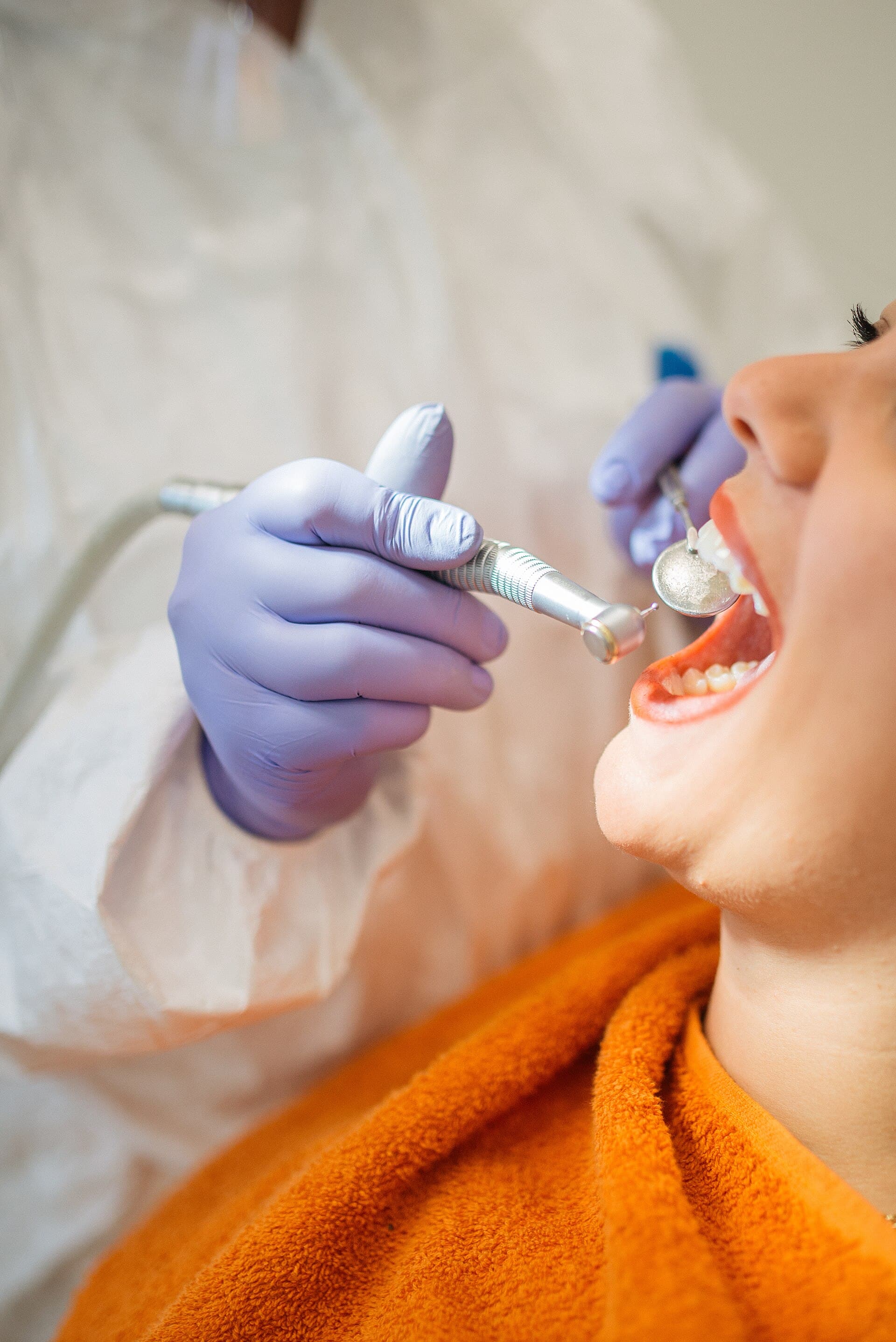
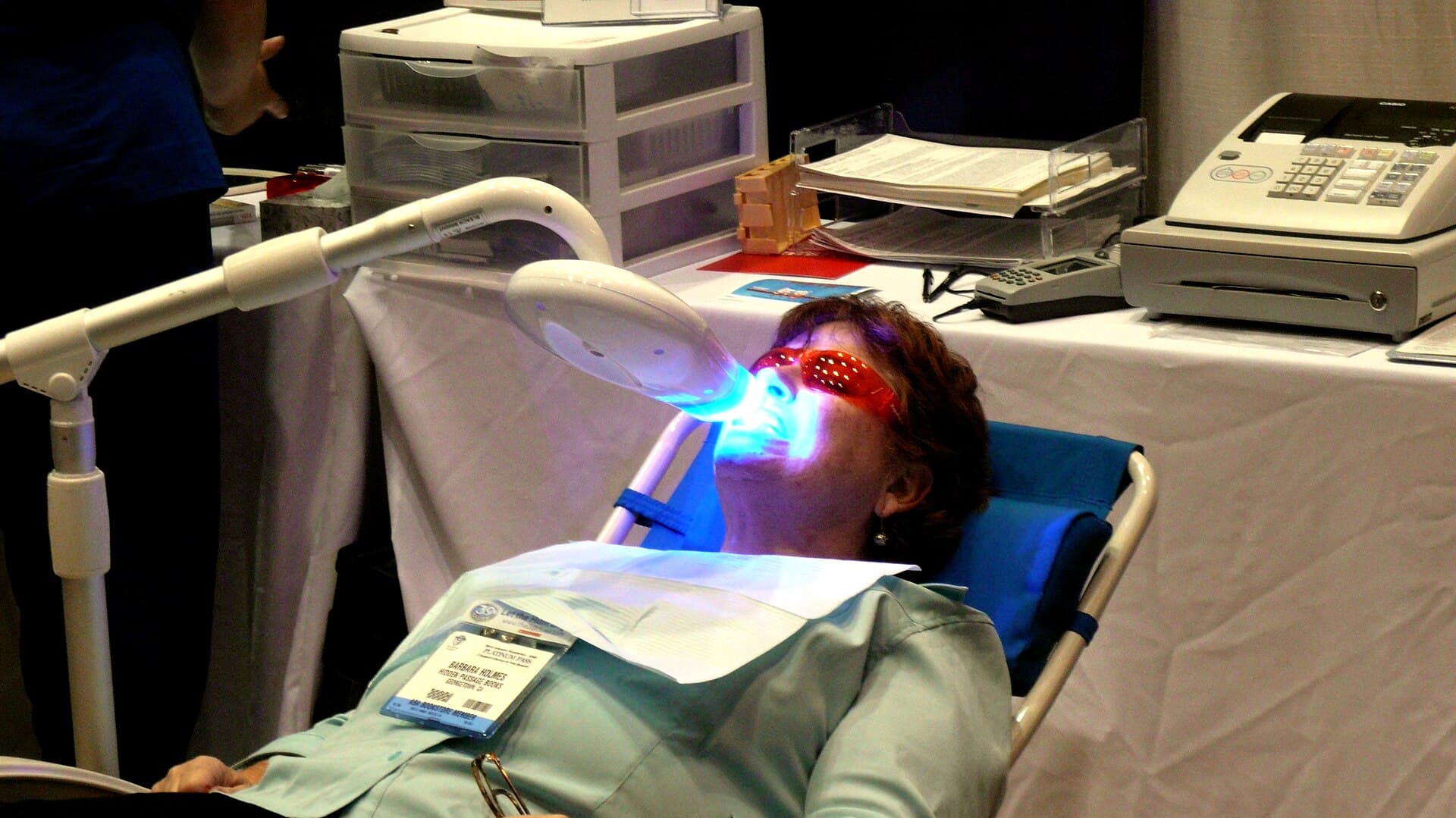
In-chair, or in-office, whitening uses a higher-concentration peroxide gel applied by a dentist or a dental hygienist under a dentist’s supervision, with gums isolated and eyes protected. Some rooms add a light. The light is marketing more often than it is chemistry. Heat and light can dehydrate enamel, which makes teeth look temporarily brighter until they rehydrate overnight. That Monday-morning “wow” is partly water leaving the tooth.
A typical Perth in-chair session in 2025–26 is often quoted in a broad band from the mid hundreds of dollars into the low thousands, depending on whether a custom tray for touch-ups is included, how many arches are treated, and whether the practice is selling a brand name or a house protocol. Treat those figures as estimates, not a menu. Suburbs differ. Materials differ.
What you are buying is supervision and time compression. Isolation of the gums matters. So does the chance to stop if sensitivity spikes. What you are not buying is a permanent new enamel. Colour rebound is ordinary. Coffee the same afternoon is how people undo a four-figure hour.
Take-home trays are slower and often fairer
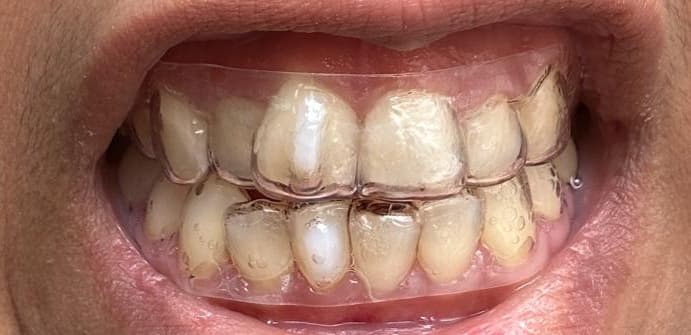
Dentist-made take-home trays are vacuum-formed over a model of your teeth. You wear a measured peroxide gel for a run of nights or days, according to the instructions that came with that gel — not according to a TikTok timer. The concentration is lower than most in-chair products. The contact time is longer. Many dentists prefer this path because the shade change is more even, the patient can pause if teeth ache, and the same trays can be reused for a later top-up.
Broad Perth private fees for custom trays and a course of gel, as 2025–26 estimates only, often sit in the mid hundreds to around a thousand dollars. Over-the-counter strips and boil-and-bite trays cost less and fit worse. Gel that pools on the gums is how you get white patches of chemical burn and a week of regretting a chemist-aisle decision.
If the trays rock, send them back. A tray that does not seal is not “close enough”. It is a leak onto gingiva.
Pharmacy strips can lift mild coffee stain. They will not even out a tetracycline band, and they will not match a lateral incisor that has already had root canal treatment. Read the peroxide percentage. Australian retail products are capped for a reason.
Sensitivity is a feature of the chemistry
Peroxide moves through enamel. It can inflame the pulp temporarily. Sensitivity during or after bleaching is common, not a personal failing. It is worse if you already wince at ice in a Cottesloe beer garden, if you have recession, or if enamel is thin from years of grinding or reflux.
Desensitising toothpaste used for a fortnight before trays, potassium nitrate gels, and shorter wear times are ordinary management. They are not a promise you will feel nothing. If pain lingers more than a couple of days after you stop, the tooth needs an examination, not another syringe.
Bleaching does not “eat” healthy enamel in the way internet threads claim when a dentist-strength gel is used as directed, with isolation, on an intact tooth. It can roughen and dehydrate the surface for a time. It can make existing cracks more obvious. It can make a leaking filling announce itself. That is information, not a reason to bleach harder.
Do not bleach over untreated decay. Do not bleach a tooth that already aches on its own. Peroxide is not a filling.
Enamel has a ceiling
There is a shade beyond which more gel produces more zing and no further lift. People who chase a Hollywood opaque white on Australian enamel often end up with translucent edges that look grey in daylight, or with teeth that no longer match the whites of their eyes. That is a cosmetic own-goal, and it is hard to reverse.
Existing restorations stay put. If you bleach first and then replace the visible composites and crowns, the new work can be matched to the new shade. If you bleach after the crowns, you have two colours in one smile. Sequence is a clinical decision. It should be written down before anyone books the lamp.
Gum health is not optional prep. Inflamed papillae plus peroxide is a miserable afternoon. If the gums bleed on brushing, you are in preventive care territory, not a whitening chair. Treat the inflammation. Then talk about shade.
Beauty-salon bleaching is a different legal object
Australia restricts higher-strength hydrogen peroxide and carbamide peroxide for tooth whitening. Those products sit with registered dental practitioners, not with a casual beauty therapist on Hay Street who has added “smile” to a lash menu. State and national rules have tightened over the past decade precisely because unregulated bleaching produced chemical burns, swallowed gel, and teeth treated with no examination.
This is general, not a prosecution brief. If a premises that is not a dental clinic offers a strong bleach, a light hood, and no medical history, the risk is not only a poor shade. It is injury without the safeguards that registration is meant to provide. Look up the person who will put gel on your teeth on the AHPRA register. If there is no dentist attached to the service, do not invent a loophole because the price looked like a facial.
Home kits bought from social-media warehouses are the same problem in a padded bag. Unknown concentration, no isolation, no examination. “Natural” charcoal pastes are abrasive. They can scratch enamel and make the next stain hold faster. Oil pulling is folklore. It does not change dentine.
Our editorial standards exist because a before-and-after tile is not evidence. Clinics can be both competent and loud. You want competence, and you want the gel to be legal.
Extras almost never buy a shade
Hospital cover will not pay for whitening. Extras cover, on most Perth tables, treats cosmetic bleaching as an exclusion or as an item with a rebate so small it is theatre. A “major dental” heading is not a promise. Preferred-provider lists that waive the gap on a scale and clean do not extend that courtesy to a lamp.
Ask the fund in writing, with item numbers, if a clinic staff member says “your extras might cover it”. Then read health fund extras in Perth before you treat a HICAPS terminal as a discount on cosmetic work. The same visit may still include an examination and a clean that extras will touch. Keep those lines separate on the invoice.
If money is the constraint, a dentist-supervised tray kit is usually the more honest spend than a branded in-chair hour you cannot maintain. Neither is a clinical emergency. Stain can wait. A cracked molar cannot.
Who should wait, and who should not bleach at all
Wait if you are pregnant or breastfeeding and the work is purely elective — not because peroxide is a proven catastrophe in that setting, but because elective chemistry can wait for a mouth that is not already dealing with pregnancy gingivitis. Wait if you are in the middle of clear aligner treatment and attachments cover half the labial surface; you will bleach around plastic buttons and then wonder why the shade is patchy. Wait until after braces are off and retainers are stable; there is a longer explanation in after braces in Perth.
Do not bleach to hide decay. Do not bleach a single dark tooth without asking whether the nerve is dying. Do not bleach if you cannot stop the staining habit you intend to resume in the car park. FIFO rosters and a long-black habit are not moral failures. They are why top-up trays exist.
Children and adolescents with immature teeth are a poor whitening demographic. The pulp is large. Sensitivity is worse. The colour is still changing on its own. A sixteen-year-old who wants a brighter smile after school photos needs an examination and a conversation about enamel, not a spa voucher.
A short method before you book the lamp
Use this, then stop scrolling shade guides.
- Have a current examination and a clean. Lift the stain you can lift with a polish.
- Confirm which teeth will not change — crowns, large fillings, a grey non-vital incisor.
- Confirm gum health. Bleeding is a stop sign.
- Choose trays or in-chair for a reason you can say out loud: time, sensitivity, evenness.
- Confirm the fee as an estimate in writing, and confirm extras will not rescue it.
- Confirm who is registered to apply the gel.
If the first conversation leaps from a check-up to a “smile package” that bundles whitening, bonding and aligners into one finance form, you are in a sales meeting. Colour is allowed to be the only job. It is also allowed to be no job at all.
This is general information about cosmetic bleaching as it usually meets Perth patients, not a treatment plan and not a product endorsement. Your own enamel, restorations and medical history decide what is sensible; a shade guide does not.