Parents in Perth often treat the first dental visit as a school milestone, like a hat for the Kindy photo. The first tooth arrives closer to six months. Decay does not wait for a classroom. Australian paediatric guidance has said for years that a child should see a dental practitioner by the first birthday, or within six months of that first tooth — not because a nine-month-old needs a scale, but because the adults in the room need a look at feeding, bottles, fluoride and the way a mouth is actually cleaned at 2 a.m. in a Baldivis hallway.
This is not a clinic advert and not a scare. Dentist Perth does not book toddlers. It is a practical account of what that first hour is for, how school dental and the Child Dental Benefits Schedule sit beside it later, and how to talk about the chair so it becomes ordinary. If you are choosing who to trust with a small person, how to choose a dentist in Perth still applies — AHPRA, extras, and a room you can reach on a bad day. The family dentistry hub is the wider shelf.
First tooth, first birthday — not first cavity
Baby teeth matter. They hold space, they let a child chew and speak, and they can abscess. A decayed front tooth in a two-year-old is not “just a baby tooth”. It is pain, infection, and sometimes a hospital general anaesthetic that a family did not have on the calendar. Early visits are how you hear that before it is an emergency.
What the dentist is looking for in the first year or two:
- how many teeth have erupted, and whether any look marked or hypomineralised
- the way the gums sit, and whether there is a tongue-tie conversation that actually belongs with feeding, not with a sales laser
- bottle and sippy-cup habits, overnight milk, and the long game of free sugars
- fluoride: toothpaste amount, tap water, and whether a varnish is useful
- whether the adults have untreated decay they are sharing through spoons and dummies
You do not need a perfect child. You need a lift-the-lip habit at home and one professional look before Kindy.
If the first tooth is late, still book by the first birthday. If teeth arrive at four months, do not wait for the cake. Children with medical conditions, craniofacial differences, or a very anxious household can be referred to a paediatric dentist — a specialist title you can check on the AHPRA register. That is not precious. It is scope.
What the visit actually is
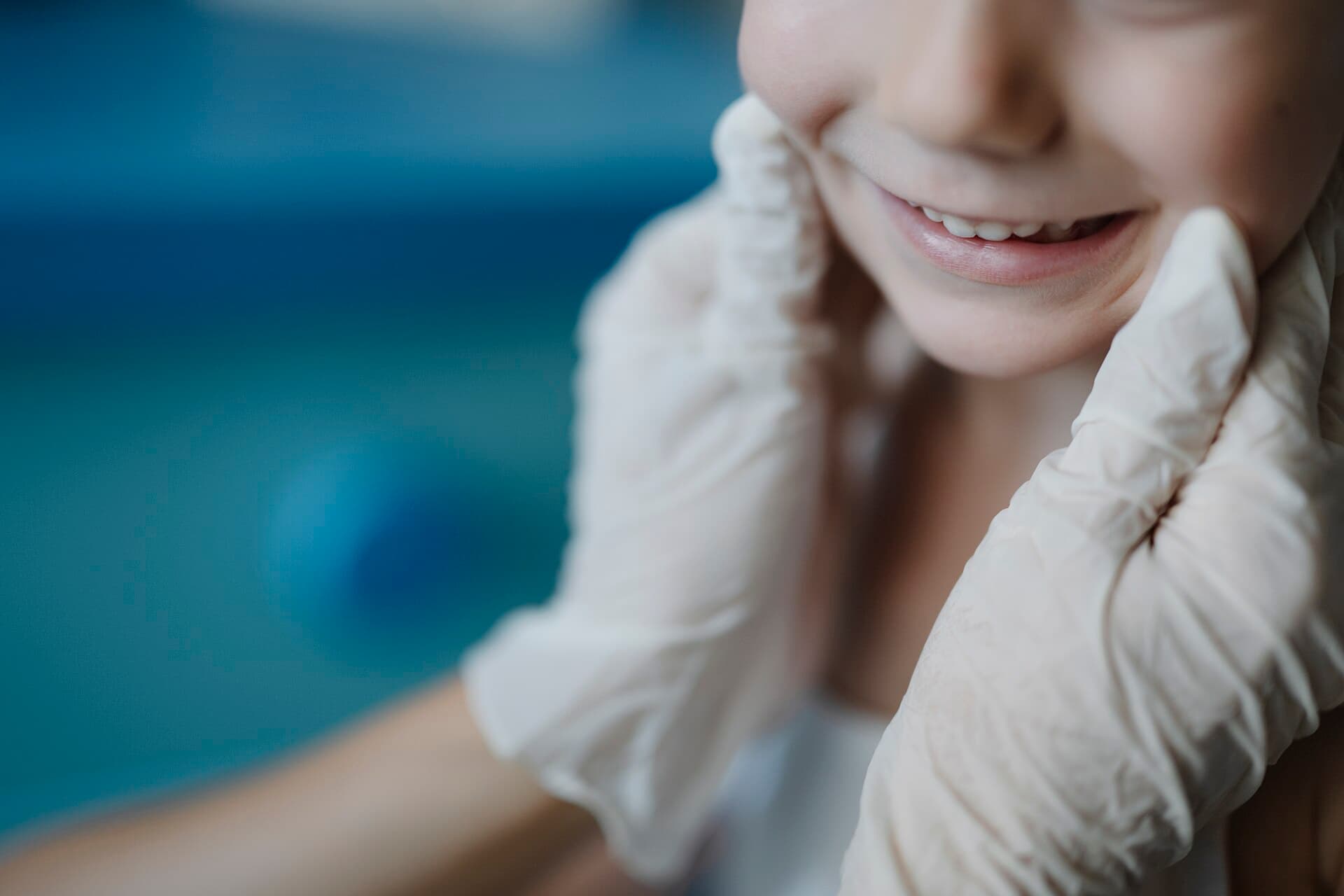
A first visit for a baby or toddler is often a knee-to-knee examination: the parent and the practitioner sit facing each other, the child lies across both laps, and someone counts teeth with a mirror and a light. It can take a few minutes. It can include a cry. Crying is not a failed appointment. Restraint that frightens everyone is a failed appointment. You are allowed to stop, sit up, and try again.
Radiographs are uncommon in a well one-year-old. They become reasonable when contacts close, when a hole is suspected, or when trauma has happened on a scooter path in South Perth. Fluoride varnish may be painted on if the risk is high. That tastes of nothing much and is not a filling.
The useful half of the visit is the conversation. How you brush a tooth you can barely see. A smear of age-appropriate fluoride toothpaste, not a pea, for the very young — then a pea-sized amount when they are older, according to current Australian recommendations your dentist should confirm, because guidance has moved over the years. Spit, do not rinse. Tap water in Perth is a fluoride story of its own; read fluoride and tap water for WA kids rather than importing a Facebook argument from another state.
You should leave with a sense of risk, not a goodie bag as a bribe. If the first conversation is about a “kids’ club” and a balloon and not about night-time milk, you have been entertained. Entertainment is fine. It is not the clinical point.
Make it ordinary, not a threat
Children borrow adult fear. If you say “they won’t hurt you” in the car park, you have introduced hurt. If you promise a toy on the way out of every visit, you have made dentistry a transaction. If you use the dentist as a warning for lollies, you have made the chair a punishment.
Better scripts are dull:
- We are going to let someone count your teeth.
- You can sit on my lap.
- You can say stop.
- Some people like the chair; some people do not; both are allowed.
Bring the comforter if there is one. Book a time that is not nap-o’clock and not the hour after a failed supermarket shop. Morning after breakfast beats late Friday. Tell reception if the child is autistic, has sensory issues, uses a wheelchair, or will not be touched around the head without a story. Longer appointments and a quiet room are ordinary requests, not special favours.
Siblings in the same appointment can help or can detonate. A child who has already had a calm visit is a useful model. A child who had a filling last month is not.
Do not rehearse the drill if there is no drill. Do not show a horror video. Do not promise that nothing will happen if you do not know. The first visit is looking. If something needs treatment, that is a second conversation, with time to think, and with consent that is not shouted over a crying toddler in the corridor.
Anxious adults deserve their own plan. If you have not sat in a chair for a decade because you are afraid, do not use your child’s appointment as your exposure therapy. Book your own. Read the anxiety options on this site if you need them. Children notice who is gripping the armrest.
Home between visits
Lift the lip once a week in good light. White marks along the gumline of upper front teeth are an early warning, especially in children who fall asleep on a bottle. Brown is later. Pain is late.
Brush twice with the right amount of fluoride toothpaste for the age. You brush, or you finish, until the child has the dexterity — often well into primary school. “They like to do it themselves” is how plaque stays on the same molar.
Water between meals. Milk in a cup as they grow, not a bottle in a cot as a pacifier forever. Fruit is not the villain; grazing on dried fruit and sipping juice through a morning in a pram is a longer acid bath than a piece of apple at lunch. Medicine syrups can be sugary. Ask the pharmacist. Rinse or brush after.
Dummies and thumb-sucking are common. Prolonged, vigorous habits can move teeth. A lecture at ten months is pointless. A conversation at three or four, if the habit is still hard, is timely. An orthodontic panic about a dummy in a one-year-old is usually someone selling an appliance.
If a tooth gets knocked at the park, find the fragment if you can, call a dentist the same day, and do not “wait and see” on a baby tooth that has gone grey or an adult tooth that has been avulsed. Trauma is emergency dentistry, not a first-visit topic, but it happens to the same mouths.
School dental arrives later, and it is a different door
Western Australia’s school dental service is a public program through Dental Health Services. Enrolment is typically via the school. Care is preventive and basic, delivered in clinics on or near many campuses, with the limits of staffing and a public book. It is valuable. It is not a reason to skip the years between the first tooth and Pre-primary.
A child can have early private or public clinic visits, then enrol at school dental, then see a private dentist in the holidays for something the school clinic does not treat. None of those combinations is a moral failure. Country families feel the gaps first. A van schedule in a regional town is not a Scarborough appointment book.
If you are new to WA, do not assume the service you knew in Victoria or New South Wales. Ask the school, then ask Dental Health Services. If the child is in pain and the next school slot is weeks away, you are in the same position as any other parent with a sore tooth: a private emergency visit, a public clinic if you can get one, or the pathways in the emergency guide on this site.
School dental does not replace CDBS. It does not replace extras. It is one wallet among several.
CDBS, extras, and who pays for a two-year-old
The Child Dental Benefits Schedule is a Commonwealth Medicare benefit for eligible children, with a two-year cap and a list of basic items. Eligibility runs through family-payment rules, not through the fact of being a child in Armadale. Check the Medicare online account. Then ask whether the clinic participates and whether they bulk-bill eligible items.
A toddler check-up at a participating clinic can often be claimed if the child is eligible. A “free first visit” promotion at a private practice may be a marketing item, CDBS, or a loss-leader. Ask which. Our editorial standards exist because a balloon and a zero on the invoice are not the same as a benefit you were already entitled to.
Extras cover for children has waiting periods and annual limits like any other extras. Using extras for a child’s clean when CDBS would have taken it can empty a pot an adult will need in November. The longer explanation is in the CDBS in Western Australia piece and in health fund extras in Perth. The short version: ask which wallet before anyone swipes.
Broad Perth private fees, as 2025–26 estimates, for a child’s examination without a rebate often sit in the low-to-mid hundreds of dollars once you count the look, any varnish and a simple clean; radiographs and fillings are extra. Bulk-billed CDBS can make the same visit a zero gap at a participating clinic. Your invoice will differ. Do not skip a first look because you guessed the fee.
If money is tight and the child is not CDBS-eligible, ask about public community clinics and university student clinics. They are slower. They are still a door.
When the first visit is not a well visit
Sometimes the “first” visit is a swollen face, a broken incisor on a scooter, or a child who has never been seen and now cannot eat. That is still a first visit. It is also an emergency. Say so on the phone. Do not book a standard check-up slot and hope.
Paediatric dentists and public hospitals handle a share of young children who need treatment under general anaesthetic. That pathway has wait lists, medical assessments, and bills that split between the dentist, the facility and the anaesthetist. Ask for the split in writing. Hospital extras, if you hold them, are a different product from dental extras.
Sport will arrive soon enough. When it does, sports mouthguards for Perth kids is the piece to read before an Auskick season. The first visit is still counting teeth, not fitting a guard for a baby.
A short method for the year the first tooth arrives
- Book by the first birthday or within six months of the first tooth, even if everything looks fine.
- Practise lift-the-lip and a smear of fluoride toothpaste at home first, so the chair is not the first time a stranger is near the mouth.
- Tell the practice about medical history, sensory needs and who will be in the room.
- Check CDBS eligibility and whether the clinic will claim it, before you assume extras or a “free visit”.
- Ask about school dental when the child is actually at school, not as a reason to wait.
- Keep the language dull. Counting teeth is a job, not a threat and not a treat.
Then put the next recall in the calendar the way you put in vaccinations. Ordinary is the point.
This is general information about early dental visits as they usually work for families in Perth, not a personal treatment plan. Your child’s medical history and the clinician in the room decide what that first look includes.