Perth parents argue about fluoride in the same tone they argue about private school and whether the child should wear a jumper to netball in July. Someone at kindy said tap water is a chemical experiment. Someone on a parents’ Facebook group said you should only use a rice-grain of paste and then rinse for a minute. Someone else bought a tank of European still water because the label looked clean. None of those sentences is a public health brief.
This is not a clinic advert, and it is not an anti-fluoride polemic. Dentist Perth does not sell toothpaste. The useful questions are narrower: is the water coming out of a Mundaring or Wanneroo tap fluoridated, how much paste belongs on a two-year-old’s brush, and what happens when a household switches to bottled water because the fridge dispenser looks premium. For the appointment that should sit beside those questions, see a child’s first dentist visit in Perth. For the money around that visit, see the Child Dental Benefits Schedule in WA.
What Western Australia actually does with fluoride
Western Australia fluoridates many of its public drinking-water supplies. Perth’s scheme water is one of them. The Water Corporation, which runs the metropolitan supply, and the WA Department of Health, which sets the public-health case, are the sources that matter. They publish which systems are fluoridated, the target concentration range, and the annual water-quality reports that sit behind the glass of water on a kitchen bench in Scarborough or Armadale.
Fluoride in scheme water is not a secret additive dreamed up by a suburban clinic. It is a long-running population measure, used in Australia for decades, aimed at reducing decay across a whole city — including children who never see a private dentist in West Perth. The health department’s summaries, and the National Health and Medical Research Council’s reviews, are written in the dry language of evidence. They are less entertaining than a reel about “toxins”. They are also the documents a journalist should send a reader to.
Not every tank, bore and regional town in WA is on the same setting. Some remote and regional supplies are not fluoridated. A household on rainwater in the hills, or a rental in a town that has never added fluoride, is in a different position from a unit in East Perth on scheme water. That is a reason to ask, not a reason to assume the whole state is “dosed” or “untouched”. Water Corporation’s town-by-town information is public. Use it.
Filters complicate the picture in ordinary kitchens. A jug that improves taste does not automatically strip fluoride. A reverse-osmosis unit under the sink often does. If you have installed serious filtration because the tap water tastes of chlorine after a hot January, check what the system actually removes. Taste and fluoride are not the same molecule.
Tap water is not a treatment plan
Fluoridated tap water lowers the risk of decay at a population level. It does not make a child immune to juice in a sippy cup at 2pm, or to falling asleep with a bottle of milk. It does not replace brushing. It does not replace the first dental visit. Parents who treat the water as a complete answer tend to discover a cavity on a six-year-old molar the week before a school camp.
Think of scheme fluoride as a background dose, like iodised salt in a different public-health story. It is doing quiet work for the children who get the least dentistry. It is not a reason to skip preventive care, and it is not a reason to fear the tap.
If you want a second, human explanation after the water-quality PDF, take the question to a dentist or the school dental therapist and ask them to talk about this child’s risk — not about the internet. Our guide to choosing a dentist in Perth is about that conversation, not about finding the whitest waiting room.
Smear, pea, and the child who eats the paste
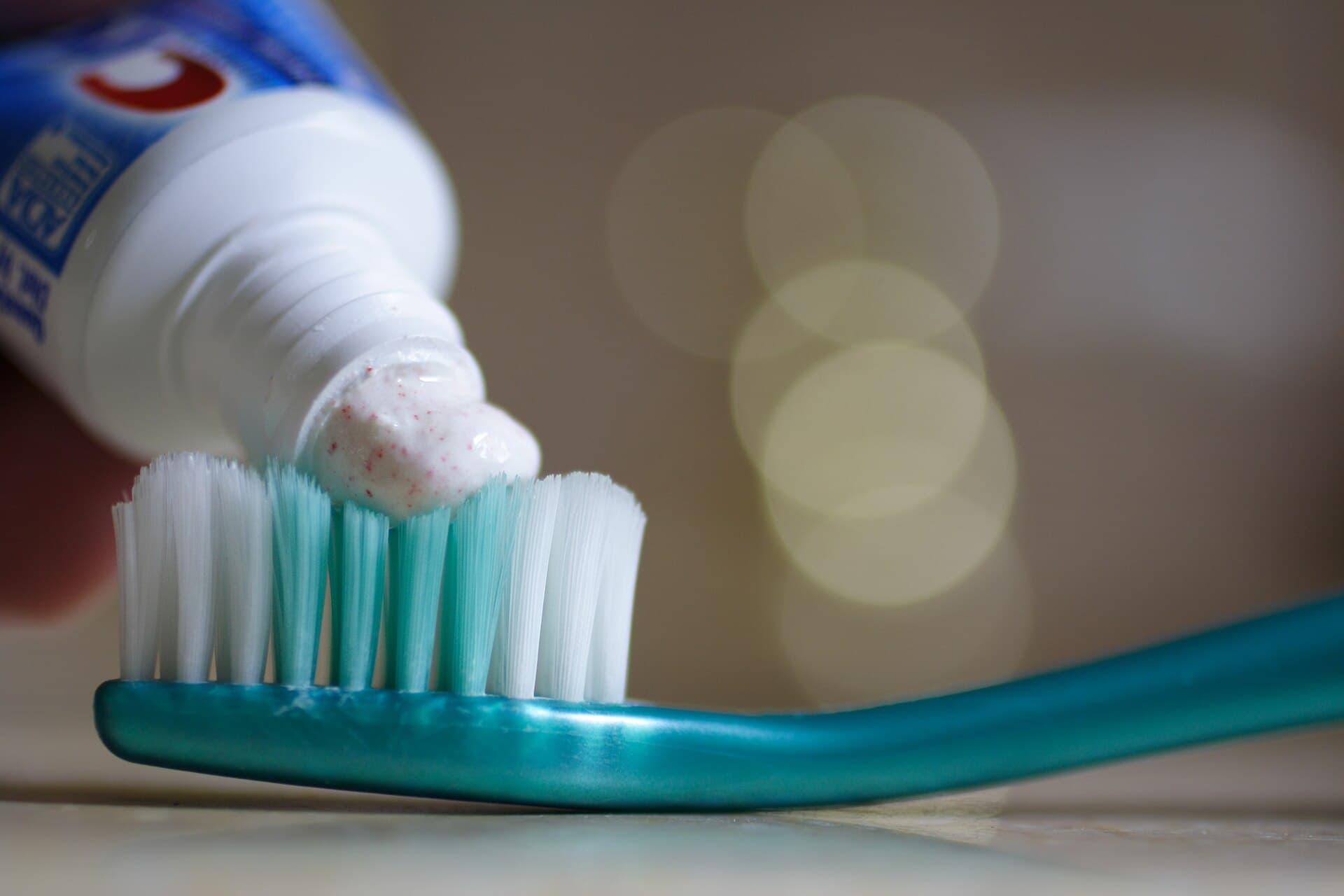
Australian guidance on children’s toothpaste is more specific than the pictures on the box. For the youngest children the amount is a smear — a thin film you can see on the bristles, not a stripe that looks like a television commercial. Once the child is older, the amount becomes pea-sized. The concentration of the paste also steps up with age. Adult paste is not a badge of toughness for a toddler.
The fear underneath the smear-versus-pea argument is swallowing. Small children swallow most of what you put in their mouth. That is why the dose on the brush is small, and why you do not leave a pump pack on a low shelf next to the bath toys. A child who treats toothpaste as dessert can take in more fluoride than the water and the smear were designed to deliver. Chronic over-ingestion while the permanent front teeth are forming is how you get the white flecks of dental fluorosis. Mild fluorosis is a cosmetic finding. It is also avoidable if the paste stays on a brush and off a cracker.
A few practical rules survive the marketing:
- Use a fluoride toothpaste that matches the child’s age, not a “natural” paste with no fluoride because a blogger prefers the smell of coconut.
- Supervise until the child can spit reliably. In many households that is later than you think — often well into primary school.
- Spit, do not rinse with a glass of water that washes the fluoride off the teeth. This is the instruction adults ignore because it feels unfinished.
- Keep the tube out of reach. Child-resistant caps are not a personality test for a three-year-old in Victoria Park.
If a child has special needs, reflux, or a diet that is almost entirely bottle and pouch food, say so at the first visit. Dose and risk change when swallowing and snacking change.
Bottled water, sparkling water and the fridge door
Bottled water is a taste and convenience product. Most of the brands in a Woolworths fridge in Booragoon are not fluoridated to the same level as Perth scheme water, and many list fluoride as “not detected” or do not list it at all. Sparkling water is still water plus carbonation; it is not a dental treatment. Flavoured sparkling water is a soft drink with better typography.
Households switch to bottles for ordinary reasons: a rental with a tank that tastes of leaf litter, a FIFO donger where the only cold drink is from a vending machine, a parent who grew up somewhere without fluoridation and never trusted the tap. None of those reasons is foolish. The mistake is assuming the bottle is “purer” in a dental sense. You have usually swapped a controlled, published fluoride level for a product that was designed to be empty.
If bottled water is the household’s main drink, say that at the dentist. The answer might be more careful toothpaste use, not a private fluoride tablet protocol you found on a forum. Supplemental fluoride drops and tablets are a clinical decision. They are not something to start because a neighbour in Dunsborough is on tank water and “does what her mum did in the 1980s”.
School drink bottles should be filled from the tap unless there is a specific reason not to. Children who sip cordial all day, then brush once at night with a smear they rinse off, are not being failed by Water Corporation. They are being failed by the snack timetable.
What fluoride does on a tooth, in one paragraph
Decay starts when bacteria on the tooth ferment sugar and produce acid. The enamel surface loses mineral. Fluoride in saliva and on the tooth surface helps that mineral return, and it makes the enamel a little more stubborn the next time acid arrives. This is chemistry at a microscopic scale, not a rinse that “coats” the tooth in plastic. It works best as a frequent, low-level presence — which is why water and a smear of paste beat a once-a-year gel that nobody can remember booking.
Professionally applied fluoride — varnish or gel in a clinic — is a different, higher-concentration tool. It is useful for children with active decay or high risk. It is not a punishment and it is not a substitute for the tap. Ask what is being applied and why. A fluoride varnish on a preschooler with early enamel marks is a common, evidence-backed step. A mystery “treatment” added to every invoice needs a sentence of explanation.
The argument you will hear at the park
Opposition to water fluoridation is not new in Western Australia. It arrives in cycles, usually attached to a council meeting in a regional town or a petition about “mass medication”. The serious version of the argument asks about choice, about people who cannot tolerate fluoride, and about whether a whole city should take a measure that most benefits children in poorer postcodes. Those are political questions. They are not settled by a meme about a European country that does not fluoridate because it uses different vehicles — salt, milk, or simply more dentistry.
The medical version of the argument points at fluorosis, thyroid stories, and IQ studies that did not survive review. NHMRC and the state health department have addressed these in language you can read without an account. If you are going to object, object to those documents, not to a receptionist in Subiaco.
People with specific medical advice to avoid fluoride should follow that advice. That is a patient and a clinician, not a suburb-wide rule. Infant formula mixed with fluoridated tap water is a question paediatric services have already written about; the usual Australian position is that it is acceptable, and that you should not construct a second water supply unless you have been told to. If that still worries you, ask the child’s dentist or GP — not a group chat.
Our editorial standards exist because health claims travel faster than citations. We will keep pointing at Water Corporation and the Department of Health rather than at a charismatic thread.
What to do this week, without buying a new filter
Fill a glass from the kitchen tap and drink it. If you do not know whether your suburb’s scheme is fluoridated, look it up on the Water Corporation or health department pages while the kettle boils. Put the child’s toothpaste on the brush yourself for a week and notice whether you have been using an adult stripe. Stop rinsing after brushing if you have been turning the bathroom into a fountain. Book the dental visit you have been postponing until the child is “ready”; readiness is not a developmental stage that arrives after the first cavity.
If extras cover is part of the household budget, read how extras and health funds work in Perth before you assume a fluoride varnish is “free because we have dental”. If the child is eligible for the Medicare schedule, use that pathway first where it fits.
Pregnancy is a separate, related conversation — the parent’s gums and the child’s future teeth share a household, not a single appointment. See oral health in pregnancy in Perth if that is the season you are in.
Fluoride is a tool with a dose. Perth tap water, used as tap water, sits on the low, daily, boring side of that dose. Toothpaste is the part you can still get wrong with a generous wrist. Bottled water is a grocery choice. None of this requires a villain.
This is general information for Perth and WA readers, not personal medical or dental advice. Check current Water Corporation and WA Department of Health publications, and speak with a registered practitioner about your own child.